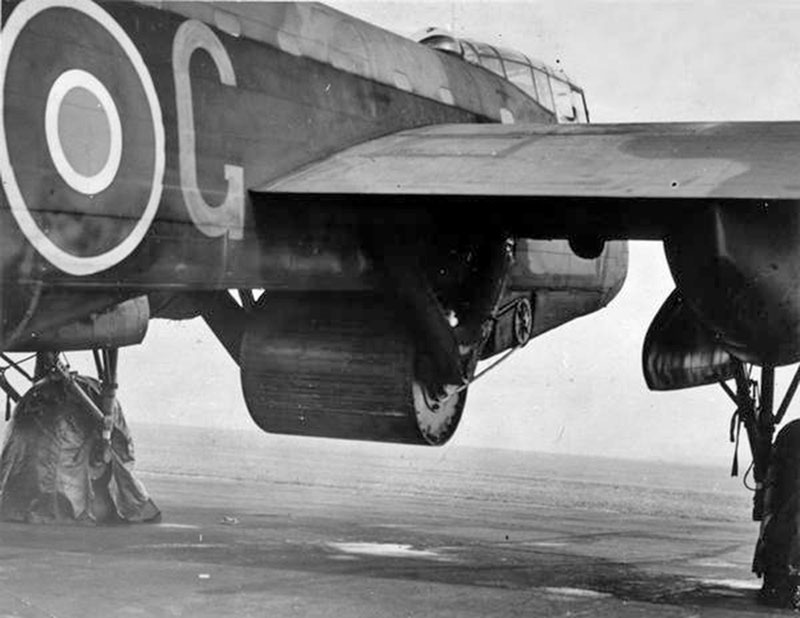
The Dambusters - Story of the bouncing bombs (Highballs and Upkeeps)
The German try
After the raid the Germans discovered an Upkeep bomb that had failed to explode lying in some woods and subsequently an 850 pound (390 kg) version of the bouncing bomb was also attempted by the Luftwaffe. Designed for use against British shipping, it was given the codename Kurt, and was built at the Luftwaffe Experimental Centre in Travemünde. In trials, dropped by an Fw 190 it proved to be dangerous to the delivering planes as the bomb matched the speed at which it was dropped. Attempts to rectify this with booster rockets were ultimately a failure, and the project was discontinued in 1944.
After the war
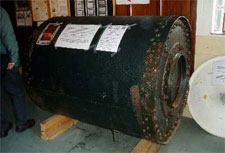
All combat bombs were disposed of after the war. But a number of concrete-filled Upkeep bombs that were used for testing and training have been recovered and are on display in several museums.
The bomb concept was kept secret until 1971 (30 years rule).
3 bombers dropping bouncing bombs
Ship attack simulation with a bouncing bomb
The bomber drops a bouncing bomb, but it bounces too high
Dropping a bouncing bomb, being hit by the water spray