Buddha Air ATR 72-500 plane crash

Key facts
- Airline
- Buddha Air
- Flight number
- U4-901
- Aircraft
- ATR 72-500
- Location
- Bhadrapur, Nepal
- Date
- 2nd January, 2026
- People on board
- 56
- Fatality
- 0
Updated on
Accident account
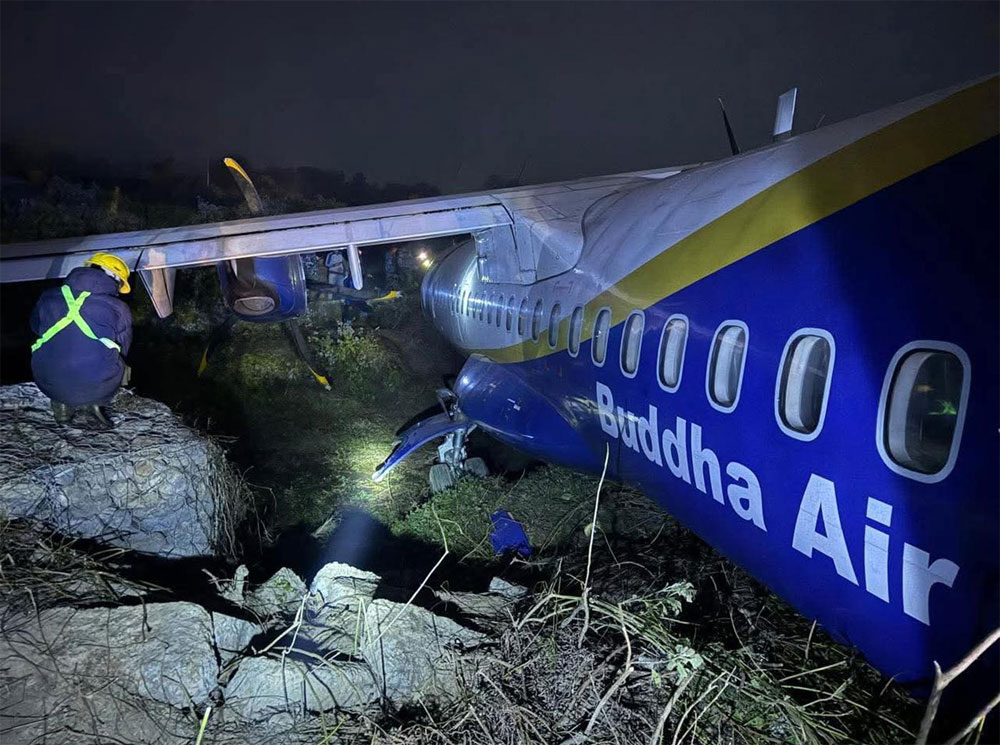
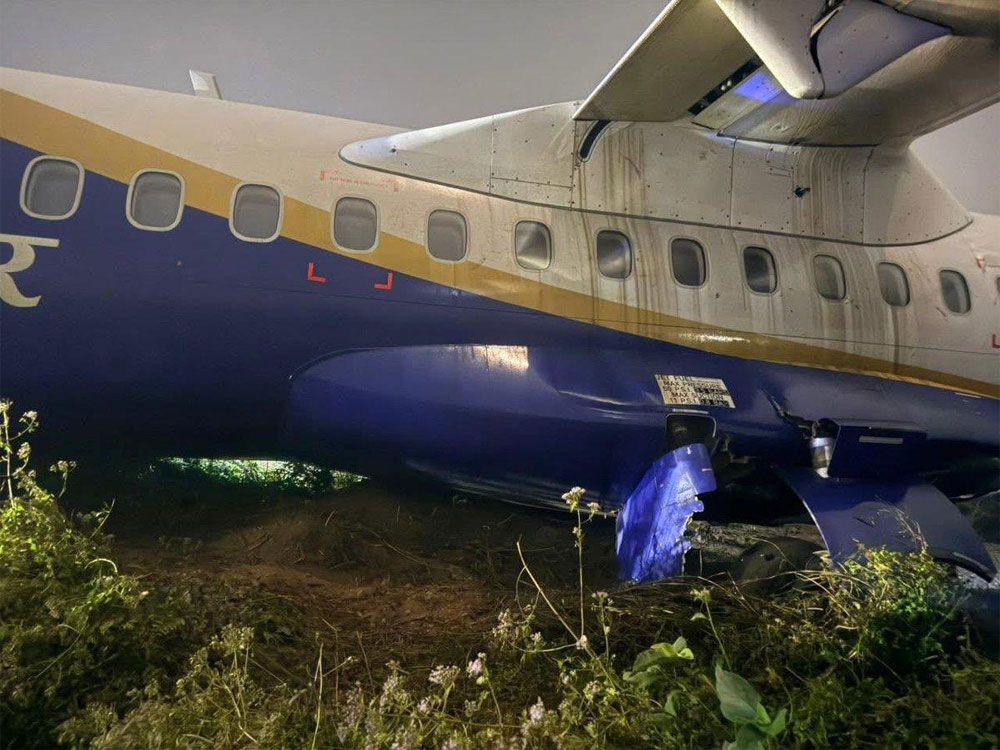
The ATR 72-500 operated by Buddha Air was performing scheduled flight BHA 901 from Kathmandu, Nepal, to Bhadrapur, Nepal. There were 51 passengers and 5 crewmembers on board. During a night landing at Chandragadhi Airport, the aircraft touched down well beyond the runway threshold and was unable to stop within the remaining runway distance. It overran the runway end, breached the airport's inner perimeter fence, crossed a stream and came to rest approximately 180 metres beyond the fence. All occupants evacuated the aircraft. Five people, including one crew member, sustained minor injuries. The aircraft sustained extensive damage and was considered damaged beyond repair.
The crew had initially planned an RNP approach to runway 10, but air traffic control instructed them to perform a VOR approach instead. At approximately 6 NM (11 km) from touchdown, the first officer observed four red lights on the Precision Approach Path Indicator (PAPI), indicating that the aircraft was below the approach glide path. He reduced the rate of descent to correct the flight path. On short final, all four PAPI lights were white, indicating that the aircraft was now above the approach glide path.
The aircraft crossed the runway threshold at approximately 127 knots, exceeding the calculated approach speed of 104 knots. Following a prolonged flare, it touched down approximately 1,080 metres from the beginning of the runway, leaving only 420 metres to stop on the 1,500-metre-long runway. A go-around was called a few seconds before touchdown but was not executed. The crew applied reverse thrust and brakes. The aircraft veered to the right and then to the left before overrunning the runway end. The landing gear, propellers and both engines sustained extensive damage.
Investigation findings
The final report issued by the Nepalese accident investigation commission determined that the cause of the accident was the failure to execute a go-around during an unstabilized approach.
The investigators also identified several contributing factors:
- Inadequate implementation of Buddha Air's Standard Operating Procedures (SOPs).
- Deficiencies in flight data monitoring, which had failed to identify recurring practices of prolonged flares and delayed touchdowns.
- Runway end lights were not visible to the crew.
- The absence of specific requirements governing first officers' clearance to perform night landings.
- Analysis of the flight recorders also revealed deficiencies in Crew Resource Management (CRM), particularly in communication, flight parameter monitoring and decision-making. The Cockpit Voice Recorder (CVR) revealed non-operational conversations and music playing in the cockpit during several phases of the flight.
The aircraft
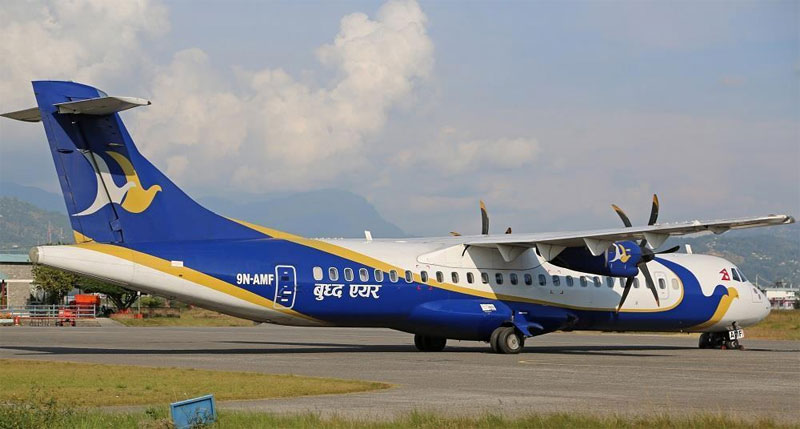
The ATR 72-500 involved in the accident was registered 9N-AMF. Built in October 2007, it had entered service with Buddha Air in 2018. At the time of the accident, the aircraft had accumulated approximately 28,014 flight hours and 49,409 cycles. It was permanently withdrawn from service following the accident.
Buddha Air is currently on the blacklist of airlines banned from flying in the European Union.
Accident location
The aircraft (ATR 72-500)
Photos