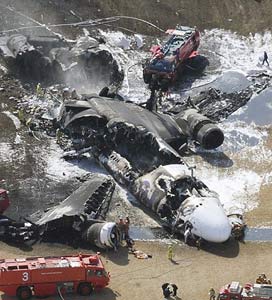
UPS MD-11F plane crash

Key facts
- Airline
- UPS
- Flight number
- 5X-2976
- Aircraft
- MD-11F
- Location
- Louisville, Kentucky, USA
- Date
- 4th November, 2025
- People on board
- 3
- Fatalities on board
- 3
- Ground fatalities
- 10
Updated on
Accident account
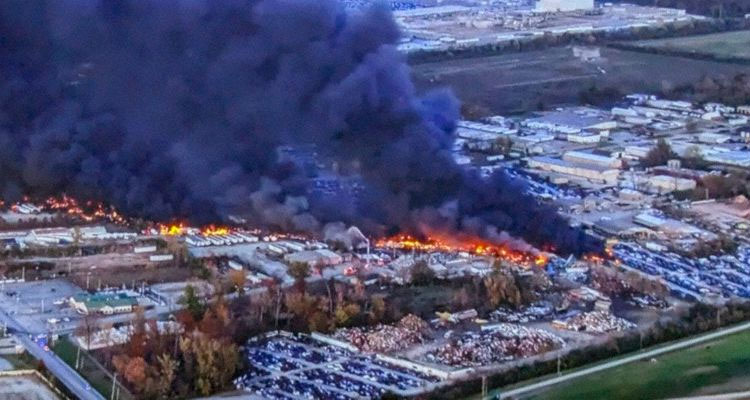
The McDonnell Douglas MD-11 operated by UPS (United Parcel Service) took off from Louisville, KY for a cargo flight to Honolulu, HI, USA. 3 crewmembers were onboard. The plane was accelerating for takeoff when the aircraft impacted ground and came to a rest at an approximate position about 0.6 NM (1km) past the runway end bursting into flames. All three occupants perished. There are 10 fatalities and 11 injuries on the ground.
Shortly after being cleared for takeoff, a large plume of fire erupted from the left side of the aircraft. The three-engine jet managed to gain enough altitude to clear the airport perimeter fence before crashing into a nearby building.
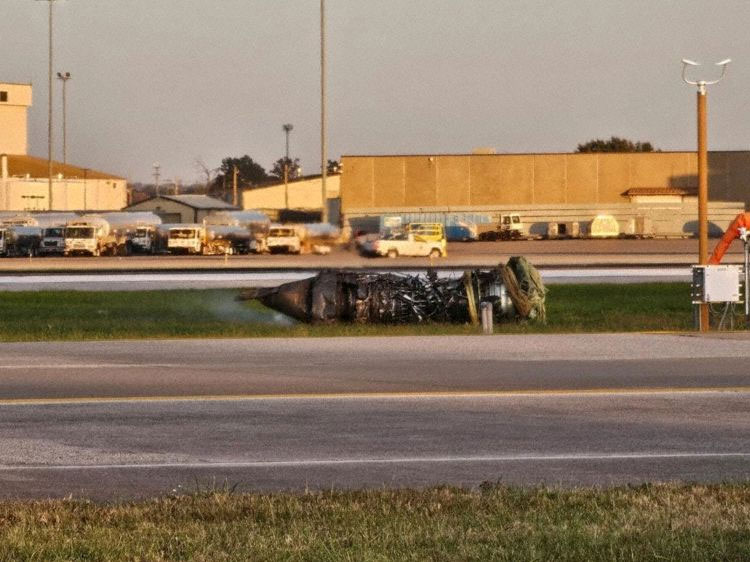
The takeoff run was uneventful initially through the different speed call outs, about 37 seconds after the crew called for takeoff thrust a repeating bell was heard which persisted until the end of the recording 25 seconds later. According to ADS-B data, the aircraft reached an altitude of approximately 475 feet MSL (equalling 100 ft above ground level) and a ground speed of 183 knots before descending and striking the ground. Preliminary reports suggest that engine No. 1, located on the left wing, may have separated from the aircraft during the takeoff roll, possibly damaging the center engine (No. 2) as it broke away.
During takeoff rotation, the pylon of engine No. 1 and the engine itself detached from the wing, resulting in a fire. Flight data recorder information shows the aircraft climbed to a maximum of about 30 feet above ground level, clearing the blast fence beyond the runway. The left main landing gear then struck the roof of a UPS Supply Chain Solutions warehouse, after which the aircraft crashed into a storage yard and two additional buildings, including a petroleum recycling facility, and was largely destroyed by fire. The debris field extended roughly 3,000 feet.
The NTSB summarized laboratory examination of the left hand pylon mounts: "After initial cleaning of the fracture surfaces, examination of the left pylon aft mount lug fractures found evidence of fatigue cracks in addition to areas of overstress failure. On the aft lug, on both the inboard and outboard fracture surfaces, a fatigue crack was observed where the aft lug bore met the aft lug forward face. For the forward lug's inboard fracture surface, fatigue cracks were observed along the lug bore. For the forward lug's outboard fracture surface, the fracture consisted entirely of overstress with no indications of fatigue cracking. The forward top flange of the aft mount assembly was examined for indications of deformation or pre-existing fractures, but no indications were found. The spherical bearing was removed from the wing clevis for further evaluation."
Designed in the late 1980s as the successor to the iconic DC-10 tri-jet, the McDonnell Douglas MD-11 went on to become a mainstay of long-haul cargo operations. With a payload capacity of up to 90 tons and a range exceeding 6,000 nautical miles, the aircraft earned its place among freight carriers for its endurance and heavy-lift capabilities.
Today, only a handful of major operators—including UPS, FedEx Express, and Western Global Airlines—continue to fly the MD-11. The type is gradually being retired in favor of newer, more efficient aircraft such as the Boeing 767-300F and 777F.
The aircraft involved in the Louisville crash was built in 1991, giving it 34 years of service. It entered the UPS fleet in 2006. The MD11 had accumulated a total time of about 92,992 hours and 21,043 cycles.
UPS MD-11 Cargo goes down after engine detached from wing
Accident location
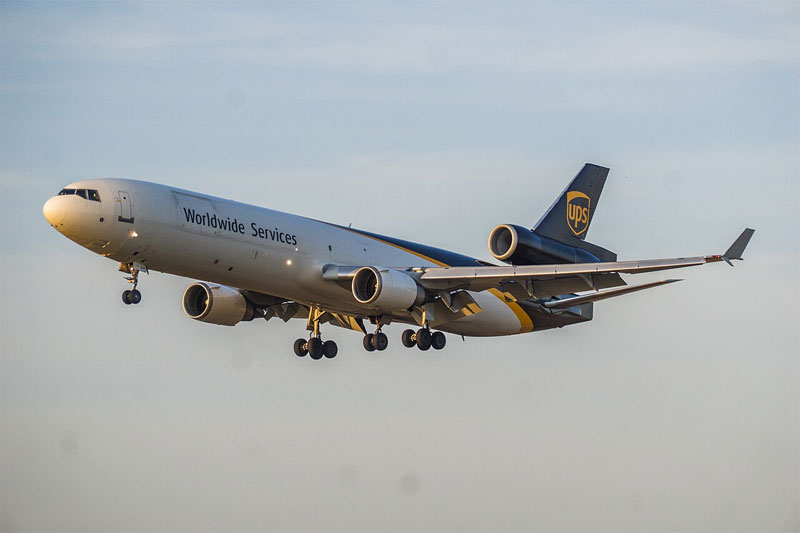
The aircraft (MD-11F)
Photos