1001 Crash — Lessons learnt for safer aviation Return to the 1001 Crash home page

12 accidents of De Havilland aircraft since 2000

List of the 12 De Havilland aircraft accidents since 2000 :

Airlines PNG Dash 8 crash
Airline : Airlines PNG
Aircraft : DHC-8-102
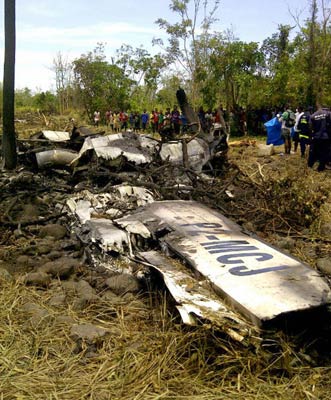
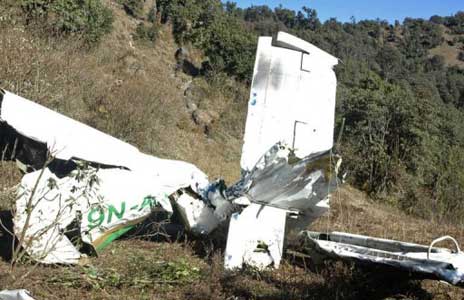
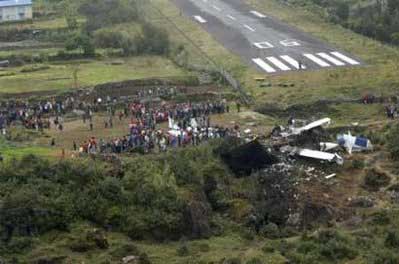
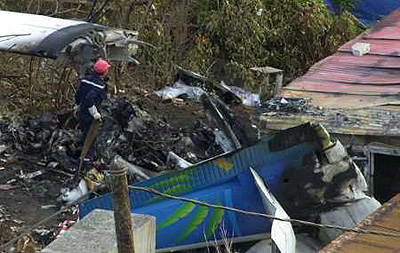
The de Havilland Dash 8-100 operated by Airline PNG took off from Lae-Nadzab, Papua New Guinea, for a passenger flight to Madang, Papua New Guinea. 28 passengers and 4 crew were onboard. The plane crashed about 12 NM (20 km) south of Madang, killing 28 occupants. 4 people onboard survived. The descent profile to Madang airport was steep because of the proximity of the Finisterre Ranges, a mountain range in north-eastern Papua New Guinea. The pilot-in-command was hand-flying the aircraft because the autopilot was unserviceable. He was maneuvering the aircraft visually to avoid cloud and thunderstorms. While descending, the overspeed warning horn sounded shortly followed by both propellers overspeeding simultaneously and exceeding their maximum rpm limit by about 60%. Seconds later, the crew declared an emergency and reported that both engines had stopped. The aircraft force-landed at 18 NM (33 km) south of Madang Airport, on sparsely timbered terrain on the north side of Buang River. The aircraft disintegrated due to impact with trees and ground and engulfed in flames. Rescuers rapidly localised the wreckage, which was on fire. The four survivors were the captain, the first officer, a flight attendant and a passenger.
View details
Location : Madang, Papua New Guinea
People on board : 32
Fatalities : 28
Airlines PNG Dash 8 with 32 people onboard crashes in Papua New Guinea
The de Havilland Dash 8-100 operated by Airline PNG took off from Lae-Nadzab, Papua New Guinea, for a passenger flight to Madang, Papua New Guinea. 28 passengers and 4 crew were onboard. The…
Colgan Air Dash 8 crash
Airline : Colgan Air
Aircraft : DHC-8-402 Q400
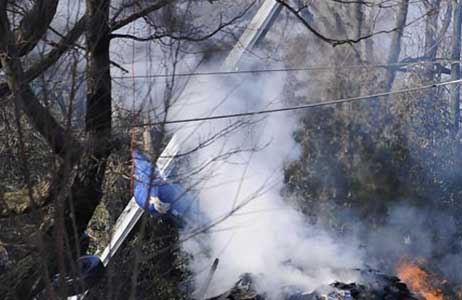
Continental Connection Flight, operated by Colgan Air, departed Newark-Liberty International Airport, NJ on a domestic flight to Buffalo Airport, NY. 44 passengers and 5 crewmembers were onboard. The airplane, a DHC-8, crashed into a neighborhood six miles short of the Buffalo Niagara International Airport. It struck a house in Clarence Center, starting a huge fire. All the people onboard were killed. There is also one casualty on ground. After a seemingly routine flight, the Dash 8 Q400 turboprop plane endured a 26-second plunge before smashing into a house. The commuter plane was on approach to runway 23. The plane slowed to an unsafe speed as it approached the airport, causing an automatic stall warning. The pilot pulled back sharply on the plane's controls and added power instead of following the proper procedure of pushing forward to lower the plane's nose to regain speed. He held the controls there, locking the airplane into a deadly stall. The plane altitude was too low to exit the stall. The weather conditions at the time of the accidents were not so bad, but icing conditions were prevailing. The National Transportation Safety Board determines that the probable cause of this accident was the captain's inappropriate response to the activation of the stick shaker, which led to an aerodynamic stall from which the airplane did not recover. Contributing to the accident were: The flight crew's failure to monitor airspeed in relation to the rising position of the low-speed cue, The flight crew's failure to adhere to sterile cockpit procedures, The captain's failure to effectively manage the flight, and Colgan Air's inadequate procedures for airspeed selection and management during approaches in icing conditions.
View details
Location : Buffalo, NY, USA
People on board : 49
Fatalities : 49 + 1 on ground
Colgan Air Dash 8 with 49 people onboard crashes in New York, USA
Continental Connection Flight, operated by Colgan Air, departed Newark-Liberty International Airport, NJ on a domestic flight to Buffalo Airport, NY. 44 passengers and 5 crewmembers were…
Air Moorea DHC-6 Twin Otter 300 crash
Airline : Air Moorea
Aircraft : DHC-6 Twin Otter 300
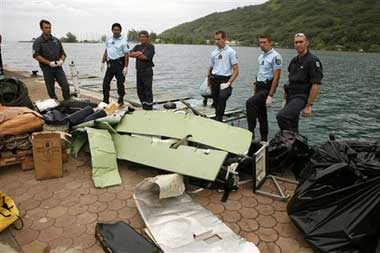
The Twin Otter DHC6-300 was operating a service to the French Polynesian capital Papeete, on the main island of Tahiti with 19 passengers and one pilot on board. Immediately after takeoff from Moorea-Temae Airport, the Twin Otter veered to the right and began to descend until it struck the sea. No distress call was received by the Air Traffic Controller. All the people onboard were killed. The airline says the twin turboprop crashed 1.85km (1 NM) from the end of the runway. The plane rapidly sunk under several hundred meters of water. The investigation shows that about 30 seconds after takeoff, the aircraft starts an abnormal descent. The pilot seems surprised. A few seconds later, the plane smashes onto the water surface. While the plane is descending, two sounds are identified as pilot actions on flight control commands, but the aircraft maintains the descent, as described by witnesses and confirmed by the violence of the impact. The engines are working normally and symmetrically. The accident has probably been caused by a rupture of the elevator control cables, which were significantly worn and, for one of them, broken in the rear section.
View details
Location : Off Moorea, French Polynesia
People on board : 20
Fatalities : 20
Air Moorea DHC-6 Twin Otter 300 with 20 people onboard crashes in French Polynesia
The Twin Otter DHC6-300 was operating a service to the French Polynesian capital Papeete, on the main island of Tahiti with 19 passengers and one pilot on board. Immediately after takeoff from…
Caraïbes Air Transport DHC-6 Twin Otter 300 crash
Airline : Caraïbes Air Transport
Aircraft : DHC-6 Twin Otter 300
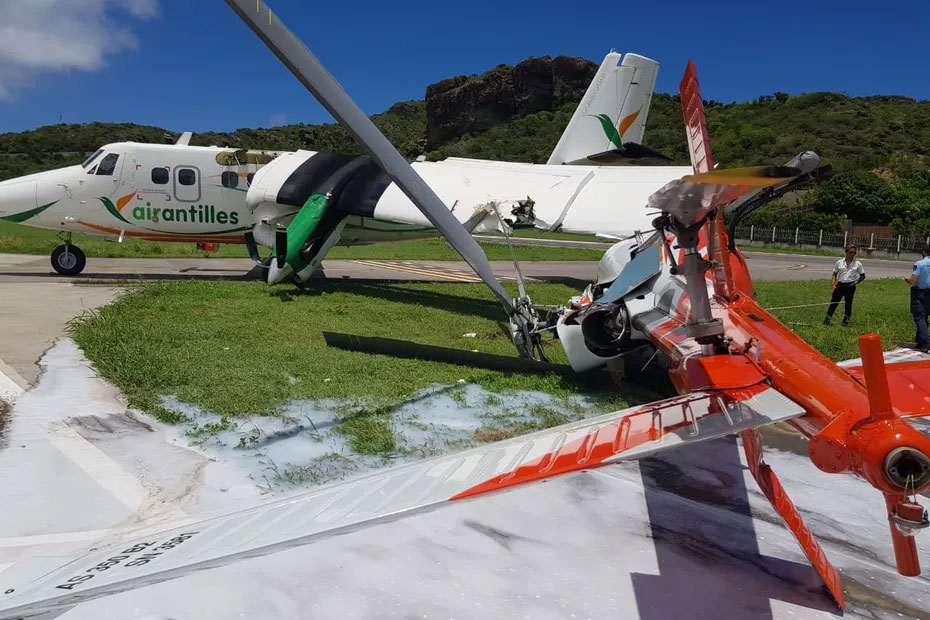
The Twin Otter plane was on a 10-minute inter island flight between St. Maarten, Dutch/French Antilles, and Saint-Barthélémy, French Antilles, and approached Saint-Barthélémy from the West for a visual approach and landing on runway 10. While on finals over the 'Col de la Tourmente', the aircraft was seen making a sharp turn to the left. The Twin Otter struck a house on the 'Col de la Tourmente' and caught fire. The 17 passengers and 2 crewmembers were killed. A man on the ground was also killed and his wife was injured. A house was destroyed. The most probable hypothesis is that the pilot would have selected the reverse beta range for the propellers with the intention of losing energy to correct the airspeed, regain the descent path or shorten the landing as much as possible. In fact, the propeller then acts as a powerful brake. It is possible that an asymmetry developed at that moment, though it would have been of relatively low amplitude, given the low thrust setting on approach, and could have been detected and likely quickly countered. However, following entry into reverse beta range, the aircraft may have developed undesirable behavior (stall warning, buffeting, etc.) or have reached the target airspeed, which would have been the desired result. In either case, it is necessary at that moment to de-select reverse beta range. Then the pilot would have pushed the levers energetically back to their normal use range by increasing the thrust, which would explain the change in the engine noise. Asymmetry in the power levers movement, or in the operation of the propeller mechanism, or even in the position of the propeller levers, would then have led to asymmetry between the engines, to an extent that would have led to a violent yaw movement, inducing a sharp roll to the left, possibly associated with a stall of the left wing, then a dive. The pilot would not have been able to regain control of the aircraft, which would have been both too slow and too near the ground at that moment.
View details
Location : Saint-Barthélémy
People on board : 19
Fatalities : 19 + 1 on ground
Caraïbes Air Transport DHC-6 Twin Otter 300 with 19 people onboard crashes in Saint-Barthélémy
The Twin Otter plane was on a 10-minute inter island flight between St. Maarten, Dutch/French Antilles, and Saint-Barthélémy, French Antilles, and approached Saint-Barthélémy from the West for…